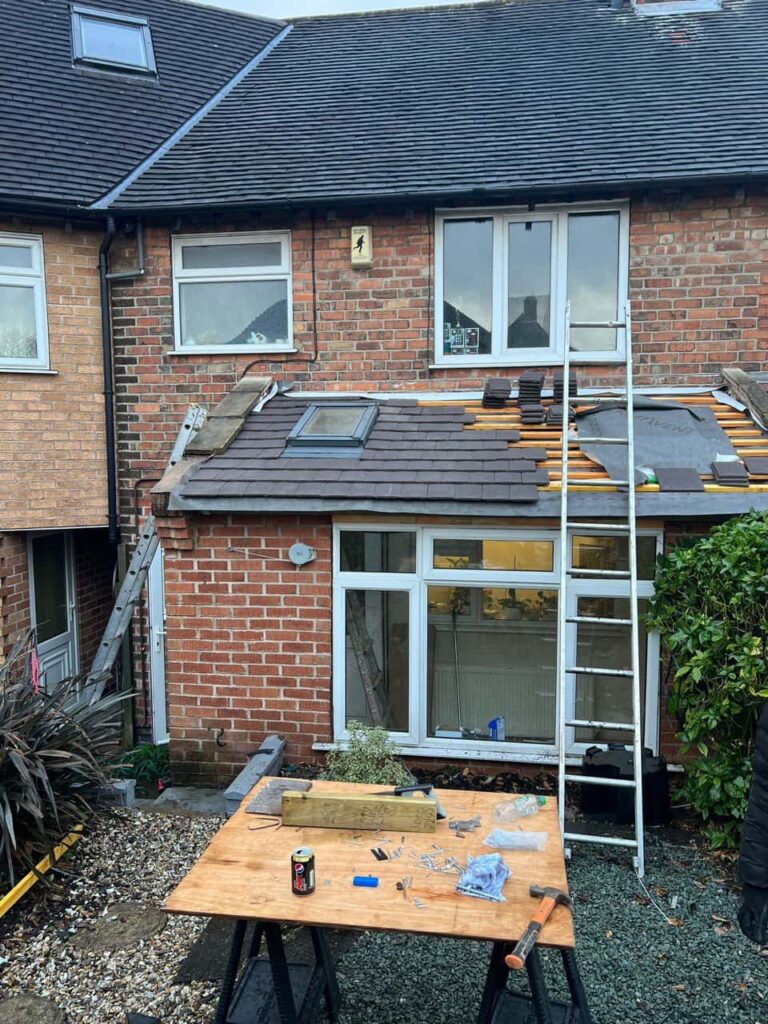
Roof flashing is an important part of a roofing system, helping protect vulnerable points where different surfaces meet. Although flashing may not be as noticeable as tiles or other roof coverings, damage to these areas can create openings through which rainwater can enter the property.
For homeowners in Mansfield Woodhouse, Nottinghamshire, understanding how damaged flashing can contribute to water ingress can help identify problems early and arrange suitable roof repairs before they become more extensive.
What Is Roof Flashing?
Roof flashing consists of protective materials installed around areas where water could otherwise penetrate the roof. It is commonly found around roof junctions, chimneys, valleys, walls and other points where different surfaces meet.
Its purpose is to direct water away from these vulnerable areas and towards the appropriate drainage routes. When flashing is correctly installed and maintained, it helps form an important part of the roof’s weatherproofing.
How Damaged Flashing Allows Water In
When flashing becomes cracked, loose, corroded or displaced, gaps can develop around the roof junctions it is designed to protect. Rainwater can then find a route beneath the roofing materials.
Water does not always enter directly below the damaged flashing. It can travel along the underlying structure before becoming visible inside the property. This means that a damp patch on a ceiling or wall may not appear directly beneath the actual source of the leak.
Common Signs of Flashing Damage
Some flashing problems are visible from the ground, while others may only become apparent during a professional roof inspection.
Signs that may indicate damaged flashing include:
- Damp patches on ceilings or walls
- Water appearing during or after rainfall
- Loose or lifted sections of flashing
- Cracks or splits around roof junctions
- Visible gaps between flashing and surrounding materials
- Rust or deterioration on metal flashing
- Repeated leaks in the same area
A recurring leak should not be ignored, even if it appears to dry out between periods of wet weather.
Why Flashing Around Roof Junctions Matters
Areas where two parts of a roof meet can be particularly vulnerable to water ingress. Changes in direction and the joining of different materials create points where water needs to be carefully controlled.
Flashing helps guide water away from these junctions. If it has deteriorated or been incorrectly positioned, moisture can enter beneath the surrounding roofing materials and potentially affect areas that are not immediately visible.
Flashing and Chimney Areas
Chimneys are another area where flashing plays an important role. The junction between the chimney structure and the roof needs to be properly protected so that rainwater cannot penetrate the connection.
Damaged or deteriorated flashing around a chimney can result in leaks that appear inside the property some distance from the original defect. A professional inspection can help establish whether flashing is contributing to the problem.
The Effects of Continued Water Ingress
Once water begins entering through damaged flashing, continued exposure can affect roofing materials and areas beneath the roof covering. Persistent moisture can also lead to damp conditions inside the property.
The longer a leak remains unresolved, the greater the opportunity for the affected area to deteriorate. This is why investigating the source of water ingress is important rather than simply dealing with the visible mark inside the property.
Why Professional Flashing Repairs Matter
Repairing flashing requires more than sealing an obvious gap. The surrounding roofing materials and the condition of the flashing need to be assessed to determine why water is entering.
A professional roofer can inspect the affected area, identify damaged sections and determine whether repair or replacement is appropriate. Addressing the underlying cause helps restore the roof’s ability to manage rainwater effectively.
How to Reduce the Risk of Flashing Problems
Regular roof inspections can help identify deteriorating flashing before it develops into a significant leak. Homeowners should pay attention to recurring damp patches, visible movement around roof junctions and signs of deterioration.
It is also sensible to arrange professional attention when a roof develops an unexplained leak. Early investigation can help identify vulnerable areas before continued water ingress causes further problems.
Roof Flashing Repairs in Mansfield Woodhouse, Nottinghamshire
For homeowners in Mansfield Woodhouse, Nottinghamshire, Mansfield Woodhouse Roofing Repairs can assess damaged flashing and investigate roof leaks associated with water ingress.
A professional inspection can help establish the source of the problem and identify the appropriate repair work needed to restore protection around vulnerable roof junctions.
Conclusion
Damaged roof flashing can create small openings that allow rainwater to penetrate areas that should remain protected. Cracks, loose sections, deterioration and poorly sealed junctions can all contribute to water ingress, while the resulting leak may appear some distance from its actual source.
If you have noticed signs of a roof leak or damaged flashing in Mansfield Woodhouse, Nottinghamshire, contact Mansfield Woodhouse Roofing Repairs to discuss your requirements and arrange a professional assessment.
Call us on: 01623 700 890
Click here to find out more about Mansfield Woodhouse Roofing Repairs
Click here to complete our contact form and see how we can help with your roofing needs.