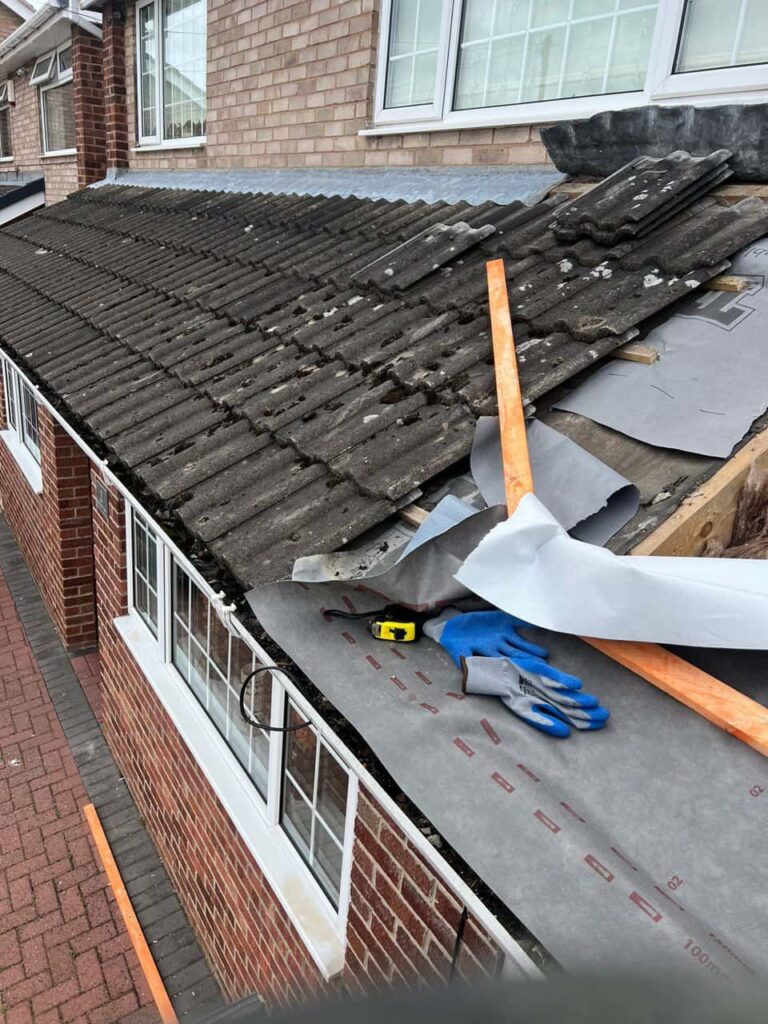
Severe weather can place considerable strain on a roof. Strong winds, heavy rainfall and flying debris can damage roof coverings, loosen tiles and create weaknesses that may allow water into the property. Some problems are immediately visible, while others may only become apparent once rain enters the roof structure.
Knowing what to do after severe weather can help homeowners in Mansfield Woodhouse, Nottinghamshire identify problems early and arrange appropriate repairs before further damage develops.
Check Your Roof After Severe Weather
Once weather conditions have safely passed, inspect the roof from ground level for obvious signs of damage. Avoid climbing onto the roof yourself, particularly if tiles or other materials appear loose.
Look for:
- Missing or slipped roof tiles
- Cracked or broken tiles
- Loose ridge or verge tiles
- Damaged flashing
- Debris on the roof
- Blocked or damaged gutters
- Visible gaps or exposed areas
- Water marks inside the loft or upper rooms
Even if the roof appears largely intact, a professional inspection can identify less obvious damage that may not be visible from the ground.
Common Types of Storm Roof Damage
Strong winds can disturb individual tiles and other roof components. A tile may become loose without immediately falling away, leaving an opening through which rainwater can enter.
Flashing around roof junctions can also be affected by severe weather. If flashing becomes loose or damaged, water may find its way into vulnerable areas of the roof.
Heavy rainfall can expose existing weaknesses as well. A small defect that was previously manageable may become a noticeable leak following prolonged or intense rain.
Signs of Water Getting Into Your Roof
Storm damage does not always produce an obvious hole in the roof. Water can travel beneath roof coverings before appearing inside the property.
After severe weather, check the loft and upper ceilings for:
- Damp patches
- Water staining
- Dripping water
- Damp insulation
- Musty smells
- Moisture around roof timbers
If you discover signs of water ingress, the source should be investigated promptly. The visible damp area is not necessarily directly below the point where water entered the roof.
What to Do If You Find Missing or Slipped Tiles
Missing or slipped tiles should not simply be ignored because the rest of the roof looks unaffected. An exposed section can leave the underlying roof vulnerable to further rainfall and wind.
Avoid attempting to replace roof tiles yourself, particularly where access requires working at height. A professional roofer can assess the affected area, check surrounding tiles and identify whether additional components have been disturbed.
Replacing or securing damaged tiles can help restore the roof’s protective covering and reduce the risk of further water ingress.
Temporary Protection After Storm Damage
If storm damage has created an opening, temporary measures may sometimes be necessary while waiting for permanent repairs. However, homeowners should avoid putting themselves at risk by climbing onto a damaged roof or attempting complicated repairs during or immediately after severe weather.
If water is entering the property, move vulnerable belongings away from the affected area where possible and use suitable containers to catch dripping water. Any electrical equipment affected by water should be treated with caution.
Professional assistance can then be arranged to assess the roof and determine the appropriate repair.
Why Prompt Roof Repairs Matter
Leaving storm damage unattended can allow a relatively localised problem to become more extensive. Rainwater may continue to enter through damaged areas, potentially affecting roof timbers, insulation, ceilings and internal finishes.
Loose roof components can also become more vulnerable during subsequent periods of wind. Addressing the damage promptly helps restore the roof and provides an opportunity to identify other areas that may have been affected by the same weather event.
Professional Storm Damage Roof Repairs
A proper roof inspection should look beyond the most obvious damage. A roofer can check the roof covering, flashing, ridge and verge details and other vulnerable areas to establish the full extent of the problem.
This is particularly important after severe weather because several components may have been affected at the same time. Identifying all relevant defects allows repairs to be planned appropriately rather than addressing only the first visible issue.
Wind and Storm Damage Roof Repairs in Mansfield Woodhouse, Nottinghamshire
For homeowners in Mansfield Woodhouse, Nottinghamshire, Mansfield Woodhouse Roofing Repairs provides professional assistance with roof damage following severe weather.
Whether you have noticed slipped tiles, damaged flashing, a leak or another visible problem, a professional assessment can help establish what needs attention and whether further damage is present.
If your roof has been affected by recent severe weather, contact Mansfield Woodhouse Roofing Repairs to arrange an inspection and discuss the required repairs.
Conclusion
Wind and storm damage can affect a roof in several ways, from slipped tiles and damaged flashing to hidden water ingress. Checking for warning signs after severe weather and addressing problems promptly can help protect the roof and the property beneath it.
If you are concerned about storm damage to your roof in Mansfield Woodhouse, Nottinghamshire, professional inspection and suitable repairs can help restore its weatherproofing and condition.
Call us on: 01623 700 890
Click here to find out more about Mansfield Woodhouse Roofing Repairs
Click here to complete our contact form and see how we can help with your roofing needs.